
Mormons Spearhead International Charities
July 14, 2011 by admin
Filed under Mormons Giving Aid Globally
An article on Mormons in Business dot org talks about Russell Ellwanger, who currently lives in Israel and is the CEO of TowerJazz, a publicly traded semiconductor company on NASDAQ. TowerJazz is headquartered near Nazareth, Israel, with a U.S subsidiary located in Newport Beach, California and facilities in China and Japan. Margret, his German wife (whom he met on a mission to Germany, where she was also serving) spends nearly all of her time and resources managing the various charitable projects of forPeace. Those projects now serve hundreds of thousands in Israel, Cambodia, and now Kenya. The programs are innovative and therefore amazingly successful.
Micro-Loans? Try Micro-Savings?
Margret believes that the micro-loan programs functioning in many third-world countries get families off on the wrong foot from day one of their involvement. Her incredible projects in Cambodia begin with micro-savings, and have allowed 1.5 million Cambodians to lift themselves from poverty into the middle class. Currently, nearly 300,000 Khmer Cambodians are participating.
One of the reasons for the success of Marget’s charities is that there is no “rich big-brother” looking down on the needy, and no do-gooders going in and doing a project, then departing. The latter means that the project breaks down and becomes derelict, while the former ends up being no real help at all. The forPEACE organization has locals and permanent residents on the ground where help is needed. They are always there with consistent help. Also, the programs are self-driven.
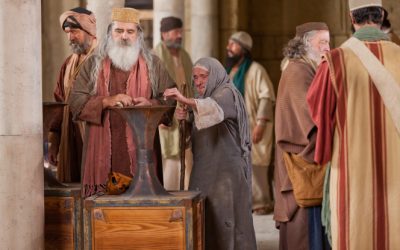
The initiative in Cambodia is called “Tabitha,” named after a biblical woman who went around doing good. Tabitha was founded in 1994 by Canadian Janne Ritskeswith a goal to restore Khmer people hope and confidence and enable the poorest of the poor in Cambodia to improve their health, living conditions, and lifestyle. Here is a brief explanation of how the micro-savings program works.
The program has four main phases: The micro-savings program to teach money management principles; cottage industry to teach job skills and to generate paid positions; the building of wells to provide families with clean water to improve health and living conditions; and house building, to improve family comfort and living conditions. By the time a family works through the four phases, they have moved from abject poverty to the middle class.
In the beginning, the family sets a goal to save 25 cents each week. Every member of the family works hard to reach this goal, with everyone, even the children, participating. At the end of 10 weeks, the family has saved $2.50. Tabitha employees visit enrolled families each week and collect their savings. After 10 weeks, Tabitha pays the family 10% interest, $0.25,
bringing their total to $2.75. Each family then decides what to do with their savings. Many buy 5 baby chicks at $0.50 each.
After 10 more weeks of saving, families have another $2.75 to decide how to spend. They sell the chickens they raised free range for $10 each. With $52.75 they often buy: A sack of rice – 50 kilos for $40.00; 20 more chicks – $10.00; Second hand clothes for their children. As situations improve, families begin to save 50 cents each week. Now families are able to buy and sell more chickens at a profit. Eventually, they have just over $200, enough to purchase 30 chickens, or two pigs, or seeds to grow produce (making the family healthier, and to sell for profit), or clothes for everyone, or for rice. Some choose to save $15.00 toward the cost of a well.
Families increase their savings to $5.00 each week. They continue to earn 10% interest from forPEACE, funded by donations. At the next phase, they may purchase a water pump, buy more chickens, save more toward the cost of a well, or cultivate a garden. Families are now selling chickens, pigs, and produce, clothing the entire family, and have a well for clean water. They begin to consider building a real house, after living in a hovel or out in the open.
Some families enter the cottage industries established by forPEACE, especially the silk-weaving industry, which creates and sells gorgeous, high-quality purses, scarves, and other precious items. Now the children can go to schools (forPEACE is building schools, too), and the family can purchase pots and pans, cement posts for a house, and a bicycle for use in their businesses. When families are self-sufficient, after about five years of 10-week cycles, they graduate from the Tabitha Savings Program, and have built a house costing under $1,000. Tabitha sponsors house-building trips for volunteers who want to come help build houses. When volunteers arrive, the footings are already in place, and they are trained by the Khmer.
The family-run businesses include produce and livestock farms; transportation businesses; roadside stores and vendors; silversmith shops;
and the silk weaving, the largest cottage industry. Each village weaving
leader negotiates and purchases silk from silkworm farmers. Tabitha weavers dye, spin, and weave the silk. Silk fabric is transported to seamstresses. Some women sew in their villages. Others commute to Tabitha headquarters in Phnom Penh.
There are many benefits from these cottage industries: Silk sales pay for 80% of Tabitha administrative costs; Cambodians learn to take pride in Cambodian products; and women are given the opportunity to earn a
respectable living. Tabitha has built over 7,000 wells and 200 ponds and
has completed 9 schools. Over 10,000 volunteers from across the globe have helped build over 4,000 houses.
Other Projects
In Israel, Margret works with Israeli Arabs in Nazareth to lift their educational accomplishments, which lag behind their Jewish counterparts. Some projects aim to bring together Arab and Israeli youth to increase understanding. In the Negev desert in southern Israel, formerly nomadic Beduouin women engage in cottage industries such as weaving and creating herbal products to forward the literacy of Bedouin women.
In Kenya, forPEACE is partnering with Global Outreach and building an internet cafe and guesthouse in western Kenya, connecting rural villages with the world through cyberspace.
For official LDS news and updates regarding humanitarian efforts in Africa and other parts of the world, as well as world reports on Church events, visit the LDS Newsroom.
Mormon Fights Poverty Worldwide
April 27, 2011 by admin
Filed under Mormons Giving Aid Globally
Dr. James B. Mayfield is the founder of Choice Humanitarian, fighting poverty worldwide. Mayfield, a member of The Church of Jesus Christ of Latter-day Saints, and a professor emeritus of public administration and Middle East Studies at the University of Utah, was a young Fulbright scholar in Egypt in 1966. It was there that he was exposed to abject poverty. Since then he has worked in the Middle East, Africa, Asia and Latin America for the U.S. government as well as his own charitable foundation. In working with the government, Mayfield has learned by observing what doesn’t work.
“…in reviewing a $27 million U.S. water pump project in Indonesia in 1982, he found that 83 percent of the pumps were not working three years after being installed: A village chief told him they were waiting for the Americans to come back and “fix their pumps. We have assumed we can give people free things,” he said, “and they will be better.” [1]
Mayfield helped form Choice Humanitarian in the early 1980′s. In the beginning, the organization followed this same formula. When they returned to the sites of their charitable installations years later, sure enough, things weren’t working. By the 1990′s they had come up with plans to train local people how to manage their charitable works.
“We were still encouraging a dependency relationship — the villagers were waiting for an expert. We learned the projects needed to be villager-driven.”
Now it is not only poor villagers who benefit from the training and projects launched by Choice Humanitarian; it is also those who spend time serving with the organization, including retirees, youth and children.
Choice Humanitarian is currently working on a project with another organization that would utilize the approximately 1,500 “old, wobbling” satellites orbiting the earth in order to provide Internet access in at least 10,000 villages around the world for about a tenth of the cost of normal satellite access. Other, ongoing projects include teaching Bolivian women sewing and weaving skills; offering scholarships in Nepal; and teaching midwifery, basic medical techniques, small business planning and English skills for teachers in Guatemala. In Mexico Choice Humanitarian creates micro-enterprises in livestock, cheese making, handicrafts, blacksmithing, corn mills, and many other ventures. Electricity is now supplied in many villages. Women’s savings programs, health care training and classroom construction are underway throughout CHOICE Humanitarian service areas in Mexico. In Kenya, along with numerous school and classroom construction projects, women’s micro credit programs, water and sanitation projects, basic health care training, and long-range sustainable economic strategies such as the Marikani Dairy Cooperative are all encompassed in CHOICE Humanitarian involvement.
To learn more about Choice Humanitarian, to contribute, or to serve, go to their official website: http://choicehumanitarian.org.
Mormon Family Runs Non-Profit Charity in Africa
April 12, 2011 by admin
Filed under Mormons Giving Aid Globally
A Mormon family in South Africa, the Hunt Family, has provided service for fifty years. The scope of their service has grown into a thriving non-profit organization helping out in many locations. Alisa Hunt Cozzens is the current director. She remembers her mother’s acts of charity. The family had a large ranch with a poor, African village on the property. Her mother took it upon herself to provide schools, medical care, food, and clothing to the villagers, and to receive donations from sympathetic people far and wide. Community involvement became so great, it was necessary to formalize and organize the charitable giving.
For forty years, Hunt family members have come to America and organized donations to send back to the village. Their non-profit is called “Serve a Village.” One hundred percent of donated funds goes to the projects.
Alisa’s daughter Christi (now the director of operations for Serve a Village) participated in health and nursing projects all over the world and inspired the family to expand the organization’s influence to other countries. Serve a Village now has many projects all over the world such as providing for a mother/child health clinic in Kenya, a children’s cancer hospital in Moscow and hospitals in Haiti, not to mention supporting and educating the South African village where it all started: Magareng. [1]
In Magareng, unemployment is 80%. Since the village is isolated and not in flux, the Hunts’ organization has been able to provide training and increase employment opportunities. Serve a Village has branched out into medical help, too.
[Serve a Village has been able “to provide a building for a crumbling, falling apart day care for the HIV orphanage. We have trained an HIV/TB outreach group. We have been able to help those who have already fallen ill from these diseases. In the clinic, we have been able to give supplies, which have saved many lives of mothers and babies. There is tons of improvement being made, it is really exciting, but there is still a huge need.”
A bishop for the Mormon Church in Kenya has been able to coordinate and distribute supplies.
Learn more at ServeaVillage.com.
Mormons Provide Help in Mozambique
March 31, 2011 by admin
Filed under Mormons Giving Aid Globally
Blair and Cindy Packard, a Mormon couple, are providing relief in Mozambique through their organization, Care for Life. Established in 2001, the organization gives Cindy Packard an opportunity to use her midwifery skills in an area of the world with a very high infant and maternal mortality rate. Although Cindy doesn’t deliver babies in Mozambique, the entity’s services provide life-saving and life sustaining skills and help for infants, their mothers, and others. Essentially, they are in the “orphan” prevention business. CFL operates in the Sofala Province of central Mozambique with a full-time staff of about 60. Field officers, supervisors and program administrators are all Mozambican.
“One of CFL’s earliest efforts undertaken in Mozambique was to teach expectant mothers what they need to know and do to help both themselves and their infants survive pregnancy and delivery.” [1] CFL’s central focus is to preserve families and keep them intact. The organization teaches sanitation, nutrition and hygiene to adults and children. CFL also teaches how to grow gardens and preserve food in order to increase health, and involves itself with HIV/AIDS prevention. “Since the Family Preservation Program (FPP) began four years ago, over a thousand babies have been born to the mothers participating in the program. Not one of the mothers has died from complications of childbirth.” [1] Over 14,000 people have participated in the FPP program.
CFL provides guidance and education in eight areas of emphasis: education, community participation, health and hygiene, sanitation, home improvement, food security and nutrition, psycho-social/ spiritual development, and income generation. In September, 2007, the Christian Science Monitor wrote an article about CFL and said, “Care For Life, a US-based charity that is staffed primarily with Mozambicans, is at the forefront of what has become a new trend in foreign aid to Africa.” In November of 2010, the U.S. Center for Citizen Diplomacy in partnership with the U.S. State Department’s Office of Public Diplomacy & Public Affairs chose Care for Life as one of the ten “Best Practices in Global Health for 2010.”
CFL has partnered with the Humanitarian Aid branch of The Church of Jesus Christ of Latter-day Saints for some of its projects. The Mormon Church has helped with water projects in CFL communities, and with maternal health and childbirth education training initiatives. CFL has also received capacity development grants and short term missionaries from the Church.
Mormonism‘s founding prophet, Joseph Smith, wrote in December 1840 to members of the Quorum of the Twelve then serving in Great Britain that,
“A man filled with the love of God, is not content with blessing his family alone, but ranges through the whole world, anxious to bless the whole human race.”
Instead of growing their organization, CFL is packaging their programs so that other organizations can launch aid in other needy locations. To do this, CFL has enlisted help from professionals who can research and then compile data and systems for others to use.
To learn more about Care for Life, go to careforlife.org
Mormon Humanitarian Aid Summary 2010
March 16, 2011 by admin
Filed under Mormons Giving Aid Globally
The Church of Jesus Christ of Latter-day Saints (the Mormon Church), contributed to disaster relief in 58 countries during 2010. The Welfare Services Emergency Response Report shows that the LDS Church responded to 119 disasters and provided millions of dollars in emergency aid.
Earthquakes took center stage with temblors in Haiti and Chile, and New Zealand. The Mormon Church continues to send relief to Haiti. The most widespread type of disaster globally was flooding. Pakistan, China, Thailand, Myanmar, Vietnam and the Philippines, as well as Central America and northern South America, suffered from devastating floods, as has the United States. There were two major cholera outbreaks, one in Haiti and one in Papua New Guinea.
The humanitarian aid efforts of the Mormon Church are made possible through the generous donations of members and friends of the Church. One hundred percent of all contributions are used to help those in need.
Mormon Church Mobilizes in Japan
March 16, 2011 by admin
Filed under Mormons Giving Aid Globally
In March 2011 northern Japan suffered from a devastating 9.0 earthquake with resulting tsunami that obliterated coastal cities as far as 6 miles inland. The Church of Jesus Christ of Latter-day Saints has a pattern for mobilizing humanitarian aid. Because the LDS Church is so organized on the ground in regional congregations with neighborhood structures, area structures, etc., there is always a pattern in place for accounting for members, citizens of all faiths, and for getting information to Salt Lake City to initiate aid.
The Mormon missionaries in the Japan Sendai Mission were attending a “Zone Conference” thirty-five miles inland during the quake and tsunami. No LDS missionaries were hurt (over 100 were serving in the area). Five days after the earthquake and tsunami, local church leaders were able to account for all members except for one geographical congregation (called a ward) and two smaller congregations, called branches. To that point, no loss of life among Mormon Church members had been discovered.
There are about 50 LDS meetinghouses in the area, and about half sustained damage. By five days after the disaster, local leaders, working day and night, had examined all of the buildings but one and had found all of them habitable as community shelters for survivors.
Missionaries had been moved out of devastated areas and out of range of radiation contamination from damaged nuclear plants. Local leaders were helping to assess how best to get humanitarian aid into the needy areas of Japan, and Mormons around the world were asking how they can help.
Donations to the LDS relief effort can be made at lds.org. The Church also currently has a great need for donated home-made quilts, the specs for which can be found on the humanitarian aid link on lds.org. Quilts are especially needed in twin and full sizes in cotton or cotton/polyester blend fabrics.
The following press conference reveals how actions procede when disaster strikes:
Wife of Mormon Apostle Reaches out to People of Japan
Humanitarian Aid to Japan — Update, March 31,2011
LDS Welfare Services Humanitarian Response provided the following update at the end of March, 2011.
- Deaths — over 11,000 confirmed
- Missing — over 17,000
- Buildings damaged or destroyed — about 143,000
- Damages are expected to be valued at over $300 billion, making this the most expensive disaster in history
- Nuclear pollution remains a threat with contamination still being contained
- Number of people still in shelters — about 180,000
- Between 40 and 60 Mormon families have lost their homes, or their homes are uninhabitable; all missionaries are safe; all members accounted for are safe
- 23 Mormon Church buildings have suffered some sort of damage
- The LDS Church has supplied over 70 tons of relief supplies: food, water, blankets, bedding, hygiene kits, clothing and fuel
- The Church has provided scooters for representatives to reach areas unreachable by cars
- Service projects to assemble and distribute aid have been organized in Japanese stakes, wards and branches
- Over 40,000 hours of labor have been donated by 4,000 volunteers
LDS Church Donates to Samoan School
February 19, 2011 by admin
Filed under Mormons Giving Aid Globally
The Church of Jesus Christ of Latter-day Saints has donated desks and chairs to the Satupaitea District Primary School in Apia, Samoa. The Church also has donated other materials, including library books, reading books, texts books for English, Science and other subjects, reference books including encyclopedias, and self-filtering water bottles for students.
The school district was nominated to receive the aid by the Samoa Ministry of Education. Before the donation of desks and chairs, the children sat on mats on the floor. The new desks and chairs arrived from China needing assembly, which was accomplished by the LDS missionaries serving in the Savaii Central Missionary Zone – assisted by villagers.
President Laulu Mokesi Laulu of the Church’s Savaii South Stake spoke on behalf of the Church to formally present the assistance under the Church’s humanitarian aid programme.
“The Church’s assistance is given indiscriminately to those in need regardless of race, religion, and colour.”
Mormon Church Continues Aid to Haiti
January 13, 2011 by admin
Filed under Mormons Giving Aid Globally
It has been one year since the devastating earthquake that struck Haiti. Recovery has barely begun, set back by a serious cholera epidemic and non-existent government performance. The Church of Jesus Christ of Latter-day Saints is often the first on the ground and last to leave when natural disasters strike — relief work is still ongoing in southeast Asia many years after a tsunami took hundreds of thousands of lives. The Church is still providing relief in Haiti.
“We’re in as good or better of a place as any NGO,” said Lynn Samsel, the church’s director of humanitarian emergency response and community services. [1]
The Church has authorized the construction of a “bishop’s storehouse” in Haiti’s capital, Port au Prince. Though the Church has approved a ground-breaking for the building, Haitian government approval is still pending. Bishop’s storehouses have a supply of foodstuffs, clothing, and other necessities provided through the charity of the members of the Church. When people are in need, they may apply to the bishop of the local congregation. With the help of congregation leaders, the needy assess their needs and fill out an order form to be filled at the storehouse.
“Fast offerings” are used to finance charity for the poor who are members of the Church. Members fast for two meals on one Sunday each month, and then they donate the monetary value of the meals to the Church for the care of the poor. In Haiti, bishops of congregations are now obtaining supplies locally with the use of fast offerings.
The Church has also been trying to build temporary shelters, but only 10-15% of the rubble from the quake has been cleared. Because so many people died, and so many records were destroyed, it is often difficult to determine ownership of usable land.
The Church has been striving to rehabilitate its own members on the island. Three hundred fifty-six have been placed in jobs and 296 in self-employment. Business partnerships are continuing as others are being trained in new and much-needed skills, such as welding and construction. The Church is also investigating the possibility of creating church schools, since the infrastructure, including the education of children, crumbled along with homes and schools. In the meantime, the church has distributed thousands of school kits and has helped fund some training of new teachers in Haiti.
Clean water has been an important issue, brought to the eyes of the developed world by news of the outbreak of cholera. LDS humanitarian shipments have included shipping large water systems, water-filtration bottles and bags, soap and treatment products and prevention/education materials and supplies. The Church is also fine-tuning its medical aid response by studying the effectiveness of the original medical teams sent over immediately after the earthquake. The Church is learning which medical supplies are most needed, and how to coordinate staff pulled together from various locations.
LDS humanitarian aid to Haiti has included the following:
FOOD/WATER: 1 million pounds, 13 pallets of kitchen/cooking sets, 16,000 water-filtration bottles
MEDICAL: 25 pallets of medical supplies, 110,000 hygiene kits, 4,300 first-aid kits
SHELTER: 3,000 tents, 4,000 tarps
BEDDING: 13,000 blankets, 600 quilts, 48 cots,
COMFORT/CARE: 9,400 newborn kits, two pallets of toys
EDUCATION: 800 school kits
And later, specifically for cholera response, the LDS Church sent:
MEDICAL: five large medical tents
WATER: three large water-purification systems; 8,500 water-filtration bottles, with 5,000 extra filters; water-filtration bags and extra filters; water-filtration pumps and extra filters
HYGIENE: 390 cases of hand soap, 17,000 hygiene kits
EDUCATION: Cholera-education kits with instructions in French and Haitian Creole
Australian Mormons Prepare Birthing Kits for Madagascar
January 12, 2011 by admin
Filed under Mormons Giving Aid Globally
Latter-day Saint women in Australia participated in an extensive service project during the fall of 2010 in order to help women giving birth in Madagascar, where few new mothers are able to give birth with help or in sanitary conditions. The women are members of the Relief Societ of The Church of Jesus Christ of Latter-day Saints, the oldest and largest women’s organization in the world.
The service project was organized in support of The Birthing Kit Foundation-Australia (www.birthingkitfoundation.org.au) through Zonta International, an organization that supplies kits to help provide clean birthing conditions in disadvantaged countries. [1] A half million women in third-world countries die each year, due to unsafe birthing conditions. This project created 600 birthing kits meant to lower this statistic.
The LDS women donated their time and energies with gratitude that they have so many advantages in their developed society that the women in Madagascar have no access to. They were glad to be able to help in some way.
LDS Church Responds to Flooding in Columbia
January 11, 2011 by admin
Filed under Mormons Giving Aid Globally
After recent flooding and landslides in Columbia, The Church of Jesus Christ of Latter-day Saints is sending aid. The disaster is the result of torrential rains, which fell in early December. The devastation covers a large area in the country. “Over 2.2 million persons and 300,000 homes across 28 provinces have been affected, and over 300 persons have been killed. No members of the Church have died, but an estimated 300 member families across several towns have been affected — many with severe damage to their homes.” [1]
Personnel from LDS Church Welfare met with Columbia’s leaders to determine the areas of greatest need and to tailor the response to provide the greatest relief. In addition to food and water and hygiene kits, the Church will provide clothing and other aid. The Church will also send thousands of school kits, baby care kits, and quilts and bedding. The clothing will come from Deseret Industries, the Church’s thrift store, and all of the quilts have been hand-made by charitable members of the Church.
There are 170,000 Latter-day Saints in Columbia, all concerned with the well-being of their neighbors. Their help is invaluable in discerning needs on the ground and in disseminating aid. The following supplies will be shipped to Columbia:
- Hygiene kits: 11,200 kits
- School kits: 8,400 kits
- Newborn kits: 7,680 kits
- Blankets: 9,600 blankets
- Clothing: 2,250 bales (equal to about 384,375 articles of clothing)
- Bedding: 375 bales (equal to about 22,500 bedding articles) [2]